




When you think about better coffee, you probably think about better beans, a good grinder, or the right brewing method.
But there is another ingredient that makes up most of what ends up in your cup: water.
The water you use can affect extraction, flavor balance, and even mineral buildup in your coffee equipment. So, does filtered water make better coffee?
The answer depends on your starting water. Filtration can help when tap water has an unwanted taste, excessive hardness, or other characteristics that affect brewing. But removing more dissolved substances does not automatically mean better coffee.
Does the Water You Use Actually Change How Coffee Tastes?
What Percentage of Your Coffee Is Actually Water?
Most of a brewed coffee beverage is water. When hot water passes through coffee grounds, it extracts compounds that create the flavor and aroma in your cup.
The chemistry of that water affects what gets extracted and how it tastes.
Why Can the Same Coffee Beans Taste Different at Home?
Coffee flavor depends on the beans, grind size, temperature, brew ratio, extraction time, and water chemistry.
Two homes using the same beans and brewing method can get different results because their tap water contains different minerals and other dissolved substances.
Why Can Tap Water Affect Coffee Flavor?
What Does Chlorine Do to Coffee Flavor?
If your tap water has a noticeable chlorine or treatment taste, that character can carry into your coffee.
A suitable filter can reduce some of these taste and odor compounds, giving you a cleaner-tasting starting point for brewing.
How Do Hard-Water Minerals Affect Brewing?
Minerals are not necessarily bad for coffee. Some minerals can support extraction, but excessive hardness can affect flavor and contribute to scale when water is repeatedly heated.
Calcium and magnesium contribute to hardness, while alkalinity affects how water buffers acids extracted from coffee.
Is TDS a Good Measure of Coffee Water?
TDS, or total dissolved solids, tells you how much dissolved material is in water, but not what that material actually is.
Two waters can have similar TDS levels but different mineral compositions and different effects on coffee. The SCA therefore treats water chemistry as more than a single TDS number.
For home brewing, TDS is useful, but it is not the whole picture.
What Makes Water Better for Brewing Coffee?
Why Does Mineral Balance Matter?
Good coffee water is not simply water with everything removed.
Minerals, hardness, and alkalinity can all influence extraction. In particular, alkalinity affects how strongly water buffers coffee acids, which can influence perceived acidity.
That is why coffee-water discussions often consider TDS, hardness, and alkalinity together.
What Happens When Water Has Very Few Minerals?
Very low-mineral water does not automatically produce better coffee.
This is why some coffee enthusiasts use remineralized RO water rather than completely stripped water. The goal is to create a water profile that works with the coffee and brewing method.
Does Water Quality Affect Espresso Machines Differently?
It can.
Espresso machines repeatedly heat water, making mineral buildup an important consideration. Hard water can contribute to scale inside boilers and other water-contact components.
So espresso users need to consider both how water affects extraction and how it affects the machine.
Does Filtered Water Always Make Better Coffee?
When Can Filtering Improve Coffee?
Filtering can make a noticeable difference when unwanted substances in your water affect either flavor or brewing consistency. Removing chlorine, reducing excessive hardness, or controlling other water characteristics can help create a more predictable starting point for brewing.
But the goal is not simply to remove as much as possible. Coffee brewing also depends on the minerals present in the water, so filtration should be considered as a way to manage water quality rather than make the water as pure as possible.
When Might Filtering Make Little Difference?
If your existing water already tastes clean and produces consistent coffee, switching to filtered water may not create an obvious change in the cup.
The same applies when water is not the main variable affecting your brew. Freshness of the beans, grind size, coffee-to-water ratio, and brewing technique can all have a much more noticeable effect on the final result.
What Are the Trade-Offs of Filtered Water?
Different filtration methods change water in different ways. A basic filter may mainly address taste and odor, while reverse osmosis removes a much broader range of dissolved substances.
That does not automatically make one option better for every coffee setup. The right choice depends on your starting water, brewing equipment, and how much control you want over your brewing water.
Which Water Options Work for Home Coffee?
Tap Water vs. Filtered Water
If your tap water tastes good and produces good coffee, you may not need to change it.
If it has a noticeable taste, causes heavy scale, or produces inconsistent results, filtration is worth testing.
Pitcher Filters vs. Reverse Osmosis
Pitcher filters can be a practical choice for taste, odor, or certain mineral concerns.
A reverse osmosis water filter provides broader filtration by reducing dissolved substances through an RO membrane.
However, RO water is not automatically ideal coffee water. Its final mineral composition still matters.
Is Bottled Water Worth It for Coffee?
Not necessarily.
Different bottled waters have different mineral profiles, so bottled water is not automatically better than suitable tap or filtered water.
If you are comparing water sources, look at their mineral information rather than choosing based simply on the fact that the water is bottled.
Where Do Hydrofast B100 and C100 Fit Into a Coffee Setup?
What Does Countertop RO Filtration Change?
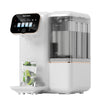
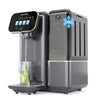
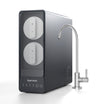
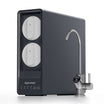
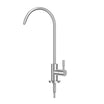
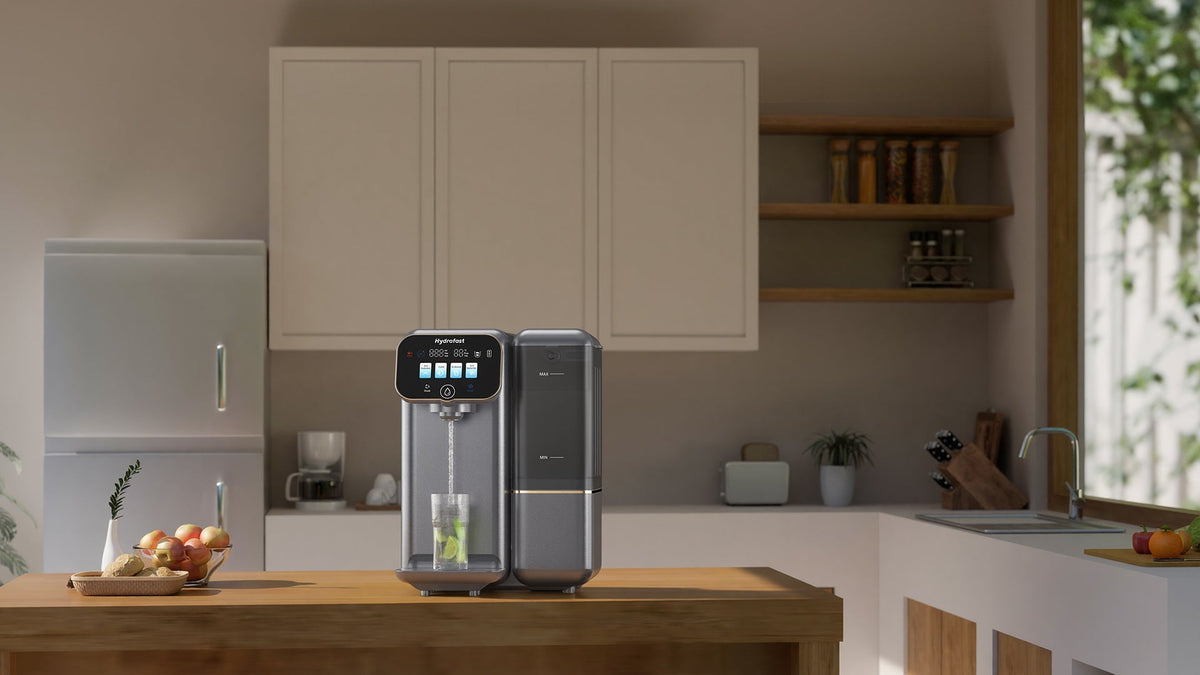
The Hydrofast B100 and C100 are countertop RO systems designed to provide a filtered water source without permanent installation.
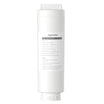
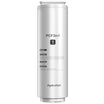
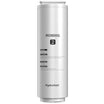
Both use a six-stage filtration chain:
Their RO membrane is rated at 0.0001 micron, with TDS reduction of up to 95% and UV inactivation rated at 99.99%. Both produce slightly alkaline water.
The MIN stage is particularly relevant here. RO filtration is not simply about removing everything possible; the final water composition also matters when the water is used for coffee.
The available product specifications do not provide a complete brewing-water profile for hardness and alkalinity, so B100 and C100 should not be presented as automatically matching a specific SCA recipe.
Instead, they provide a consistent filtered water source for your coffee setup.
What Does Hydrofast's Slightly Alkaline Water Mean for Coffee?
Both systems produce slightly alkaline water.
For coffee, the more useful concept is alkalinity's ability to buffer acids. This can affect how acidity is perceived in the finished cup.
That does not mean slightly alkaline water is automatically better for dark roasts or worse for light roasts. The result also depends on the beans, grind, brewing method, and other water properties.
If you want to test the difference, keep everything else the same and compare the same coffee brewed with your usual water and Hydrofast water.
Can RO Water Help Reduce Scale in Coffee Equipment?
Hard water can contribute to scale when repeatedly heated.
Because Hydrofast's RO membrane reduces dissolved material and is rated for up to 95% TDS reduction, the system can reduce the mineral load entering your coffee equipment.
The actual effect depends on your starting water and final water composition, so RO filtration should be viewed as a way to help manage mineral buildup, not as a replacement for your machine's descaling schedule.
How Do B100 and C100 Fit Different Daily Routines?
The B100 dispenses room-temperature water with four preset volumes: 100, 250, 450, and 600 ml.
For coffee, you can dispense the amount you need and then heat it with your kettle or coffee maker.
The C100 uses the same filtration platform but also provides 10°C chilled water, making it suitable for households that want both filtered drinking water and a convenient water source for brewing.
What Do These Systems Not Do for Coffee?
Neither B100 nor C100 has a heating function.
They are not coffee makers. The basic workflow is:
The systems also do not guarantee a particular extraction result. Beans, grind size, brew ratio, temperature, and final water chemistry all remain important.
When Is Filtered Water Worth Considering for Coffee?
Who May Notice the Biggest Difference?
Filtered water may be worth testing if:
- Your tap water has a noticeable taste or odor.
- You live in an area with relatively hard water.
- Your coffee equipment develops scale quickly.
- Your coffee tastes inconsistent despite using the same recipe.
- You want a more consistent water source at home.
When Is Your Existing Water Good Enough?
If your tap water tastes clean, produces good coffee, and does not create significant scale, you may already have a suitable water source.
The simplest approach is to test rather than assume. Keep your beans and brewing recipe constant, change only the water, and compare the result.
Conclusion
So, does filtered water make better coffee?
It can, but it depends on your starting water.
The key is not simply removing as many dissolved substances as possible. Minerals, hardness, alkalinity, and brewing method all influence how water interacts with coffee.
For home brewers, that means tap water, filtered water, bottled water, and RO water can all work in the right conditions.
The Hydrofast B100 and C100 provide a convenient countertop RO water source with six-stage filtration, up to 95% TDS reduction, and a mineralization stage.
Use the filtered water as your starting point, then let your coffee—and a simple side-by-side comparison—tell you whether it makes a difference.


Laat een reactie achter
Alle reacties worden gemodereerd voordat ze worden gepubliceerd.
Deze site wordt beschermd door hCaptcha en het privacybeleid en de servicevoorwaarden van hCaptcha zijn van toepassing.